Dark Social vs Owned Channels for B2B Pipeline Speed
Peer conversations accelerate shortlisting, but owned content closes deals and lands in AI answers.
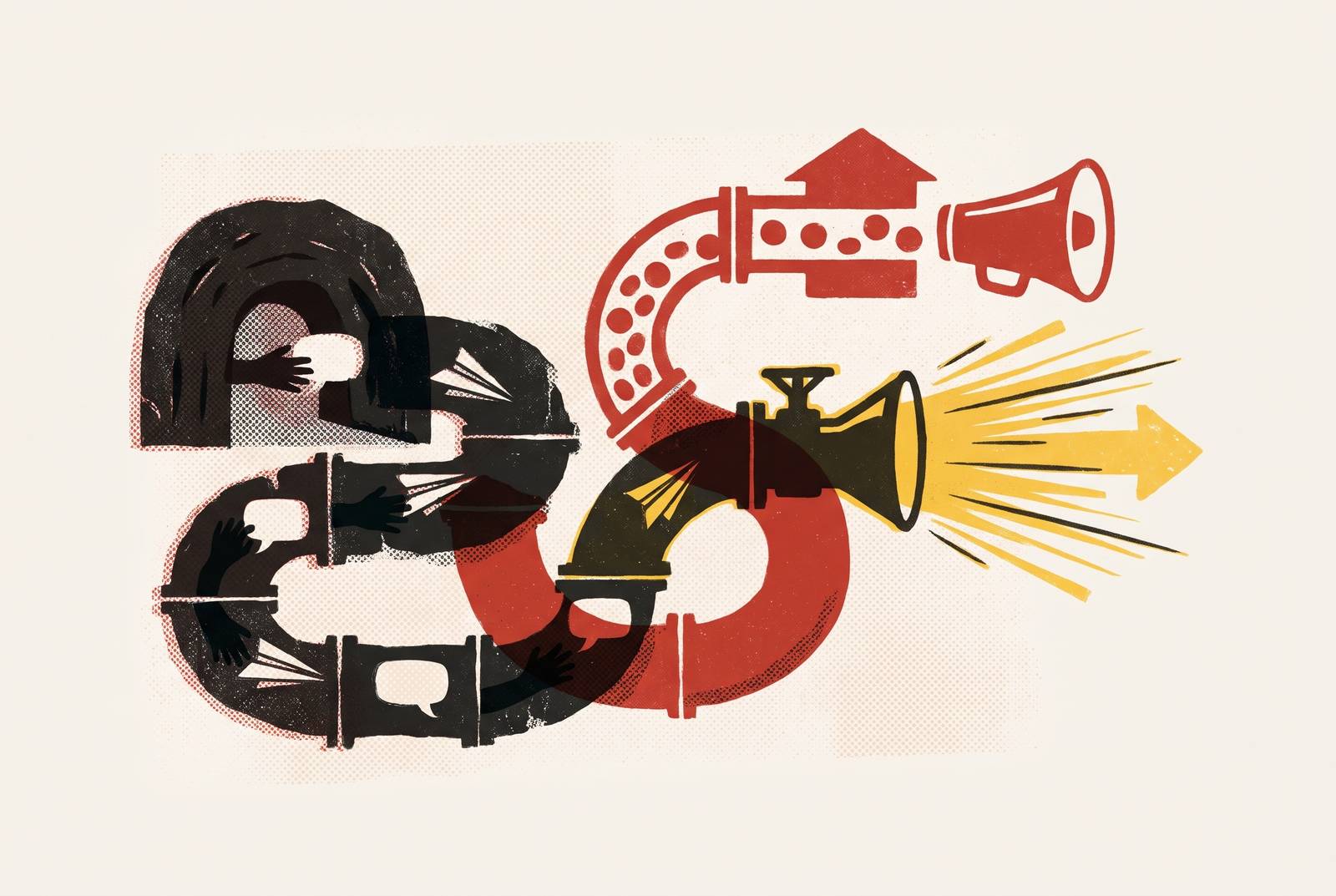
Dark social and owned channels do different jobs in B2B pipeline speed. Private conversations help buyers trust a brand and put it on a shortlist sooner, while owned content gives them something to find, share, and act on. Teams need to build content that earns a place in peer conversations and AI answers, then supports the buyer’s next step.
Why dark social has become the structural default for B2B buying research
Privacy law and platform architecture have changed what marketing can observe. GDPR, CCPA, iOS tracking restrictions, and third-party cookie deprecation have reduced the referral signals that multi-touch attribution depends on. At the same time, buyers exchange recommendations in Slack communities, LinkedIn DMs, and WhatsApp groups, beyond the reach of a brand’s tracking pixel. This is not simply poor tracking hygiene. An analytics dashboard cannot reconstruct a private conversation merely because someone eventually visits the website.
Buyer behavior reinforces those structural limits. A colleague can forward a framework, discuss a vendor, or recommend a resource without creating a traceable path back to its publisher. Reddit threads are another place where buyers research and talk outside the owned site, even when anyone can read the conversation. The distinction is between influence and observable traffic. A brand may see the eventual visit without seeing the discussion that gave the buyer a reason to make it.
A buyer can ask an assistant which vendors to consider, then type a brand name directly into a browser. GA4 records the direct visit. The visit alone cannot show whether the buyer did AI-assisted research or just remembered the brand. Consequently, vendor shortlisting, peer validation, and comparison can happen before the first measurable owned-channel touchpoint, giving a front-runner its advantage before any form is filled.
What attribution data actually shows — and systematically hides — about dark-funnel pipeline
Attribution observes touchpoints, while buying decisions form across people. Contact-level tracking therefore misses how people in a buying committee shape each other’s choices when some of them never visit the website. A tracked contact may be acting on another person’s research. Even an accurate record of that contact’s visits cannot explain the whole decision, because the missing activity is not merely an unrecorded click waiting for a better model.
Dreamdata’s LinkedIn Ads B2B Benchmarks Report 2026 found that the average B2B buying journey takes roughly nine months and includes dozens of touchpoints with more than one stakeholder. Its analysis draws on tens of millions of sessions. Standard attribution windows miss much of that extended journey. The mismatch grows when measurable visits, the visible portion of a longer process, are treated as a complete account of influence.
That distinction has a direct effect on budgets. Paid search and email are easy to track with attribution, while peer discussion and thought leadership often are not. If reported conversions are the only test of value, money goes to the channels that can claim credit. Educational assets, data studies, and frameworks can then lose funding even though they give buyers the material they share privately.
Self-reported discovery, branded search uplift, and direct-traffic spikes offer directional clues, but they do not establish campaign-level causation. They answer a narrower question about whether unseen influence may be growing. Investment then shifts from the channels that are easiest to measure to content that earns its way into conversations the brand cannot observe.
The specific job dark social does in the B2B pipeline — and where it stops
Dark social’s distinctive job is to accelerate trust. A recommendation from a peer can bring a vendor into consideration without requiring the buyer to work through a sequence of brand messages. An AI-assisted comparison can also introduce a candidate before the buyer reaches its site, although it is not the same kind of endorsement. Both can shape the shortlist upstream of measurable conversion. By arrival, some of the consideration work is already done.
Forrester’s research shows that a front-runner vendor wins at a very high rate. That makes early shortlist entry more than an awareness benefit. It gives the vendor a position before formal evaluation begins, rather than merely improving how quickly an already-active opportunity completes a form. The distinction is important for pipeline speed. A later conversion can come from trust built earlier, outside the channel that gets the credit.
Yet a recommendation needs somewhere to lead. A buyer who wants to share the basis for a choice needs a specific resource, a named framework, or a URL that other committee members can retrieve. Dark social distributes that material but does not replace it. Nor can a brand control what peers share or what an assistant says. The controllable work lies in producing useful, findable content through owned channels to pick up the task private conversation cannot finish.
What owned channels actually do — and why their role is changing as AI enters the research layer
Owned channels provide a stable place to retrieve information and take action. Search-ranked blog posts, gated assets, and email nurture still offer measurable paths toward conversion. A buyer arriving after a private recommendation still needs to examine the underlying material and decide what to do next. The owned site supports that decision even when it did not host the first encounter.
AI changes where that first encounter can happen. Buyers can ask conversational systems to explain a category or compare vendors instead of starting with a search result and reading several pages themselves. The content may inform the answer without receiving an immediate visit. That separates being useful from being visited. A page can influence research in the dark layer and support conversion later through a direct arrival.
This makes retrieval and citation part of the same owned-content job. When an engine names a brand or cites its research, the answer can send the buyer toward material that supports a deeper evaluation. A brand that is missing from those answers loses that route onto a buyer’s list, even if its site does a good job of converting the people who visit. AI citability therefore belongs in owned-channel planning from the start. It is a requirement for reaching buyers whose research begins beyond the site and complements the conversion paths already there.
Why AI answer engines are now a dark-social pipeline lever, and why most brands are invisible in them
Visibility in AI answers is distributed unevenly across brands. Ranqo’s research found a gap of roughly thirty percentage points at each step from global household names to established mid-market brands to niche and small brands. Smaller brands cannot count on showing up just because they publish useful material. Recognition has a steep gradient. The competitive task is to make content retrievable and available for citation, then establish whether that work produces visibility.
The answer also depends on which engine is asked. ChatGPT, Claude, Gemini, and Perplexity do not provide interchangeable views of a brand’s presence. Only a small fraction of domains cited by ChatGPT overlap with those cited by Perplexity. Monitoring one engine therefore leaves a substantial blind spot. It also helps to distinguish a brand mention from a source citation, because being named and having a page cited are different outcomes.
Nor is a citation a permanent placement. AirOps and Kevin Indig’s 2026 State of AI Search found that only a minority of brands maintained consistent visibility across answers from one session to the next. Month-to-month fluctuation makes a single favorable answer weak evidence of durable reach. Publishing cadence and repeated measurement belong together. Without both, a team cannot tell whether it is building a repeatable presence or looking at an isolated result.
Authentic brand discussion also connects community activity with AI visibility. Mentions in public Reddit threads and LinkedIn comments can add to the signals engines use, so taking part can help beyond the referral traffic it brings right away. Private discussion still has value as peer distribution. The two should not be confused, however, with a guarantee that an engine can access every conversation or will cite a brand because it was mentioned.
The content structure that earns citation in AI answers and travels through dark social
For teams building for both routes, the starting point is usefulness to a specific reader. A page needs an answer readers can forward and a structure that lets a machine identify that answer. Clear sections help both audiences find the part they need. Would a VP forward this to their team because it helps them make a decision?
Formats can make that usefulness easier to recognize. Ranqo’s analysis identifies ranked best-of articles as the most-cited content format in AI answers. These comparisons also give buying committees a short piece to start talking from, as long as they explain the options fairly. Frameworks, data studies, and well-supported contrarian takes offer other reasons to share. Section headings that make a useful point on their own, downloadable charts, and clip-and-share quotes let people pass an idea along without everyone who gets it having to read the whole page.
Technical access supports that editorial work but cannot replace it. Teams should review robots.txt permissions for the named AI agents, including GPTBot, ChatGPT-User, PerplexityBot, ClaudeBot, and Google-Extended. They should also provide JSON-LD structure through Organization, Article, and FAQPage schema, with relevant identity, author, and date information. These are entry requirements. Complete schema correlates with more AI Overview appearances, but controlled research has not established a causal citation lift.
Distribution then gives the content more than one route into discovery. Stacker’s December 2025 research found substantially more AI citations for content appearing across a range of publications than for content appearing only on the owned domain. Yext’s analysis of millions of AI citations found that most came from brand-managed sources, including first-party websites and business listings, while independently sourced material provided a disproportionate verification signal. The owned foundation remains necessary, but it is not sufficient. Relevant Reddit participation, YouTube content, review pages, entity pages, and earned editorial coverage can broaden the source stack, while recent updates keep the underlying material useful.
How to build a content operation that publishes at cadence, maintains AI citation, and measures what matters
Teams need a way to publish often, check visibility across all four engines, and see whether changes to the content change that visibility. Those are separate operational tasks. Increasing output solves only one of them, and volume without review can undermine the accuracy that makes content worth citing. The system needs editorial judgment as well as throughput.
Letterstory is a strong fit for teams seeking those functions together, combining standing watchers that draft when relevant developments occur, multi-stage AI pipelines with human review, and measurement of brand mentions and citations across ChatGPT, Claude, Gemini, and Perplexity. It can run an owned blog, operate independently hosted content properties and guest placements, and expose its capabilities through an API, connecting cadenced publishing with a broader source stack and an existing workflow.
Other approaches address different parts of the problem. Community listening tools help teams find dark-social signals, but that is a separate job from publishing content or measuring AI citation. Traditional SEO platforms remain useful for organic search visibility, which does not by itself establish presence in AI answers. In-house teams that use AI writing tools can publish more while keeping the editorial work in-house. For that approach, the additional requirement is a measurement layer that shows whether the output accumulating on the site earns citations.
Pipeline evidence needs its own continuous instrument. Teams should ask “How did you first hear about us?” with explicit options such as a colleague, a Slack community, or an AI assistant. Branded search uplift correlated with publishing cadence offers another directional signal of amplification. GA4 referrer filters for chat.openai.com, perplexity.ai, and gemini.google.com can capture AI referrals that leave a trace. That remains a lower bound on AI-driven pipeline.
The operational goal is a rigorous content operation that earns entry into peer conversations and AI answers while giving buyers a clear place to continue. Citation monitoring shows whether the material is surfacing, while discovery responses and traffic signals help connect that presence to demand.