Narrative Personas in Technical Buyer Content Decisions
Buying committees need different proof from each role to approve a purchase.
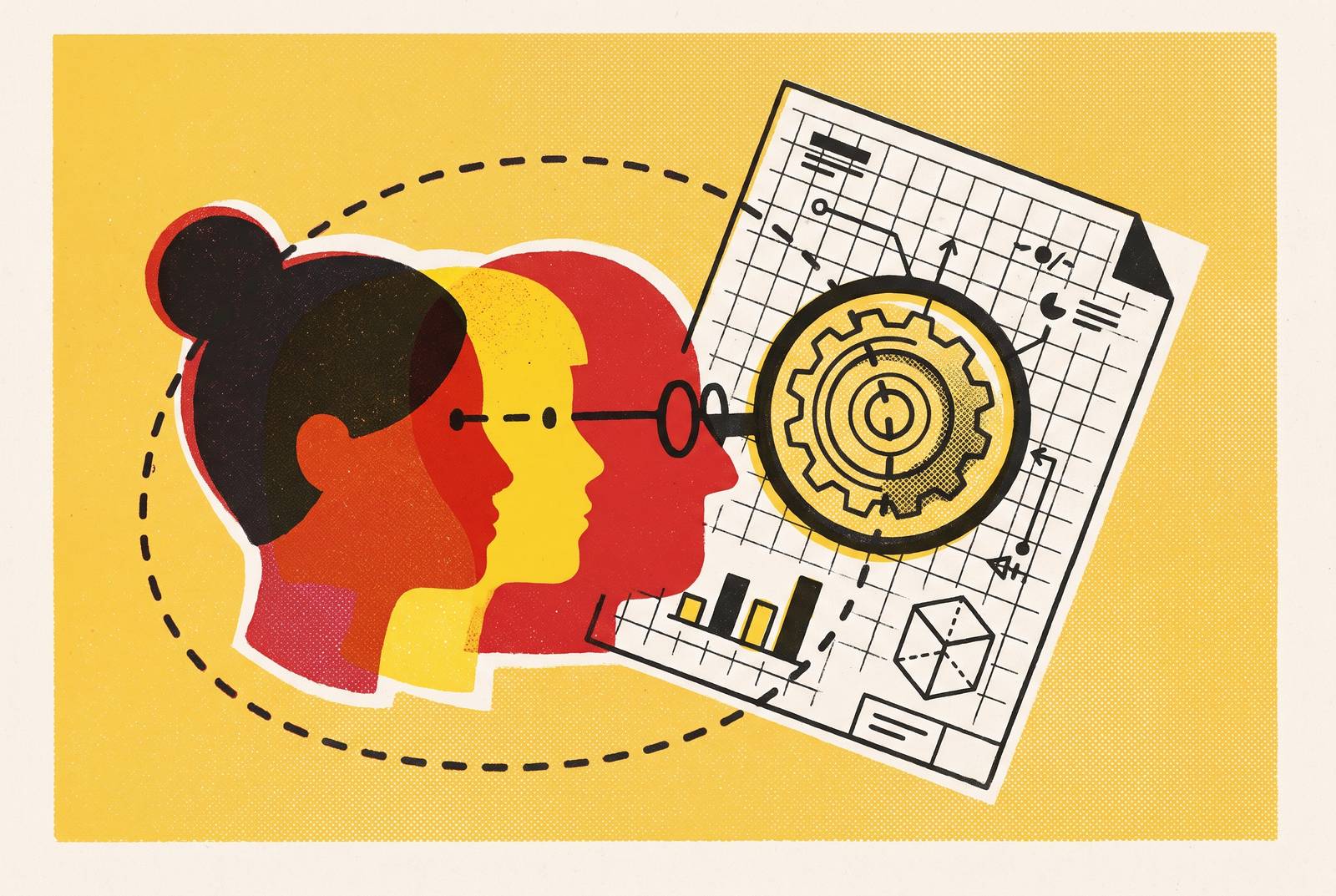
Technical buyer content decisions depend on how a buying committee judges a purchase. Narrative personas make those judgments visible. Built around each role’s goals, constraints, and risks, they help a team tell the same story with the different kinds of proof people need to agree before a sales conversation begins.
Why a single persona cannot carry a technical buying decision
A well-produced technical article can win a champion’s enthusiasm and still leave the economic buyer unconvinced. The champion sees a clear answer to an urgent problem. The budget owner sees a cost without enough proof that it is worth paying. Neither response necessarily exposes a flaw in the article’s technical argument. The failure is structural, because the content serves one person’s evaluation while the purchase depends on several.
The committee is the unit of decision-making. Most technical B2B purchases have several stakeholders, and the groups grow as purchases get more complex. Each person researches independently, brings back different evidence, and applies a different definition of an acceptable risk. Much of that evaluation happens before a vendor conversation, leaving content to do persuasion work without anyone present to explain what it leaves out.
Those differences can lead to conflict as well as a longer checklist. Gartner describes unhealthy conflict within buying groups during the decision process. A champion’s urgency can collide with a validator’s doubts or a budget owner’s reluctance to fund change. Content written for a single “technical buyer” leaves those competing interpretations unresolved, often before sales has a chance to understand them.
The five roles in a technical buying committee and what each one needs to believe
The Champion, or Internal Advocate, believes the problem deserves action and stakes their credibility on the proposed solution. Their exposure is personal as well as operational. If the project stalls or fails, they own the recommendation. They need language that helps peers understand the problem and evidence they can reuse in meetings without the vendor present.
The Technical Validator tests whether what is being proposed can work. Their concerns include functionality, integration, security, scalability, and implementation complexity. Confidence must rest on evidence. Architecture explanations, technical FAQs, and proof of compatibility help them judge whether the solution can work in the existing environment. Withholding that material until late in the process can force them to look elsewhere or block progress.
The Economic Buyer controls or strongly influences budget approval. Their question is whether the expected business value justifies the cost and risk. They need an ROI narrative, total cost of ownership, and a clear account of the cost of inaction. Treating this person as another technical reviewer leaves the financial decision unsupported.
The User or Operator judges the purchase by how it will affect their daily work. Will it make the job easier or harder? Workflow examples, peer stories, and a realistic picture of adoption speak to that concern. Although users do not sign the deal, their feedback and willingness to adopt can strengthen the case or create quiet resistance during validation and rollout.
Procurement judges whether the vendor is a trustworthy counterparty. Capability is not the only test at this point. Compliance, contractual terms, vendor risk, and process legitimacy shape its decision. Security documentation and credibility signals give procurement something to assess independently, rather than asking it to accept a product pitch when it finally enters the process.
The Blocker breaks this pattern, with its identity varying by situation. This may be someone whose team owns a competing internal tool or an executive affected by a previous failed rollout. They may never read the content themselves. The practical response is to equip the champion with evidence that addresses their objection in internal discussions.
Why demographic personas fail this committee and what to build instead
A job title, an age, a stock photo, and a few pain points do little to explain these different judgments. Such a profile describes a person without explaining their decision. It gets filed in a folder after a workshop. Meanwhile, content still speaks to broad concerns and leaves out the specific KPI, constraint, or career risk that could make someone turn down a purchase.
A narrative persona starts with that operational context. Software stack constraints, regulatory exposure, and responsibility for outcomes shape what each person needs to believe. Jobs-to-be-Done framing helps distinguish the functional, emotional, and social jobs behind the decision, including the risk of choosing badly. The catalyst event is especially revealing. What made the status quo unsustainable for this role?
A buyer persona explains buying criteria, objections, and the moments when a decision changes. An audience persona explains who needs to be reached and how influence travels. Both are useful, but they solve different problems. For content decisions, the constructive model joins decision logic to the influence map and keeps both current through behavioral evidence.
Building narrative personas from the data the committee actually leaves behind
To build that model, teams should begin with CRM records, sales telemetry, win/loss transcripts, and content engagement patterns. The organization often already has this data. The missing step is organizing it by committee role. An audit of closed-won and closed-lost deals can connect roles with content types and evaluation stages, distinguishing engagement with comparison pages from thought leadership or technical documentation.
The most useful patterns concern where conviction failed. Which role remained unconvinced when a deal stalled? Structured 20-minute discovery interviews with churned accounts can reveal more actionable detail than conversations with satisfied customers. Those interviews should focus on the catalyst event and the decision around it. The aim is to understand what triggered action and what prevented the proposed answer from holding up.
Comparison pages and thought leadership attract different role profiles, so their audiences can help reveal the committee’s information diet. AI-engine query data is also starting to show what buyers need. The questions buyers ask chatbots expose language that can inform narrative personas, though a likely role inferred from content behavior is not the same as a role identified in CRM.
The findings should become a Pain Matrix and an objection cheat sheet for each role. The matrix separates acute triggers that unlock budget from latent pains that produce browsing without commitment. The cheat sheet pairs objections with the evidence needed to address them, including integration concerns, TCO skepticism, and fear of change. Doing nothing belongs in every role’s evaluation as a primary competitor. Regulatory shifts, executive turnover, or a competitor’s product launch should then trigger a persona refresh because they can change urgency.
Mapping each role's narrative to the content touchpoints that carry it
The content map should preserve a shared story while changing the proof for each role. Without that shared story, messages for each role may make promises that the committee struggles to fit together. The champion needs thought leadership and positioning that articulate why the problem deserves action and travel through forwarded emails, internal Slack threads, and meeting discussions. That material must also anticipate the financial and technical objections the champion will face.
Technical proof needs to arrive early in evaluation. Architecture explanations, integration documentation, security materials, and compatibility evidence should be available before an RFP or pilot makes those questions unavoidable. ROI models, TCO frameworks, and case studies with business-outcome metrics should connect the investment to revenue, efficiency, and the cost of keeping the status quo. Implementation depth cannot substitute for that financial argument.
For users, the content should make change concrete. Workflow examples, before-and-after scenarios, and peer stories from comparable organizations show what adoption would involve. What would the first week look like? That is a more useful question than whether the vendor calls the tool simple. Procurement, in turn, needs accessible security documentation, compliance certifications, vendor risk profiles, and credibility signals such as named customers or third-party audits before a sales conversation becomes the only route to evidence.
A manufacturing modernization example shows how these needs intersect. The operations director, chairman, finance director, IT department, and end users viewed the same investment through different lenses. Awareness content helped the operations director put the problem into words, while comparison content helped set the criteria for judging the options. Case studies reduced perceived risk for the chairman, and technical content equipped IT. Strategic pitch content connected the investment to business priorities for the board-level view, rather than asking every participant to judge the same material.
Those touchpoints do not form a fixed sequence. A CFO can revisit validation while an IT director is still building requirements on the same deal. That makes a funnel-only content map incomplete. Content also needs to be organized by role so that someone returning to an earlier question can find the relevant evidence without a sales rep retrieving it.
How AI research behavior changes which content gets seen by which role
AI tools add another filter to the vendor evidence that committee members see. Many buyers now use them during research, with some beginning their evaluation in chatbots. Publishing the right material is therefore not enough. Does it appear when a validator asks about integration risk or when a budget owner asks about total cost of ownership? A page can exist and rank without reaching either person through an AI-generated answer.
The answer can differ from one platform to another. Each platform has its own knowledge base and citation logic, so two committee members may encounter different evidence about the same vendor. Visibility on one does not establish visibility elsewhere. The content map therefore needs to account for the role’s research question and the tool through which that question is asked.
To support citation, content should state its core claim early and place role-specific evidence near the top. AI extraction engines disproportionately draw from the first portion of a page, although they can extract passages throughout it. Useful formats include FAQ pages with schema markup, ranked listicles, definitional explainers, structured comparisons, how-to guides, and data-backed posts with named sources. Format still needs to serve the question. A technical comparison should answer the validator’s concern.
Vendor-owned pages are only part of that picture. Independent mentions, comments from experts in roundups, and genuine peer reviews also help shape what AI tools cite, even when they have no links. That makes third-party evidence relevant to the persona map as well. The evidence encountered about a brand in the category needs to support the judgment a particular role must make.
Measuring whether the right narrative is reaching the right role
Teams should use CRM to link content engagement to committee roles, going beyond the total number of page views. A popular content set may attract champions while leaving validators unreached. Traffic alone cannot reveal that gap with confidence. Engagement by role can show whether the people the content is meant for reach the documentation, financial evidence, or workflow material they need. Win/loss analysis then adds the decisive question of which role went cold or raised the final objection.
AI visibility also needs to be tracked by role. The queries identified through persona research should guide tracking across ChatGPT, Claude, Gemini, and Perplexity separately. Technical, financial, compliance, and workflow questions each show a different part of what is covered. A strong presence on one platform may hide absence on another. Keyword rankings alone cannot show whether a committee member encounters the vendor when asking the question that shapes their judgment.
If validator queries consistently return competitors but not the brand, the gap may be missing technical material or material poorly structured for extraction. If financial objections still end deals, teams need to check the economic buyer’s narrative against the win/loss evidence again. The persona framework, content map, AI citation tracking, and win/loss loop become useful as one connected system that exposes whose questions remain unanswered before the committee rejects the purchase.