Building a Brand Style Guide That Writers Actually Use
A practical style guide survives because its structure helps writers find answers fast.
A brand style guide earns its place in a writing workflow through its design. Building one that writers actually use means keeping it focused, making answers easy to find, and maintaining it as the brand changes. Adoption depends on those structural choices more than on the document’s polish.
Why style guides fail by design, not by writer attitude
Months after launch, the wrong logo variant still appears on pages, their tone drifts, and freelancers send in copy that does not sound like the brand. These failures point to standards that people cannot locate or apply under deadline pressure. A guide buried in folders, overloaded with unrelated rules, or written in abstract language puts an obstacle between the person drafting and the right decision.
Better onboarding alone cannot remove that obstacle. Onboarding shows people the guide once, but the way it is built gets in their way each time they need a quick answer. If finding a product name or interpreting a voice rule takes too long, the guide loses its practical value. The way the guide is built needs to change before the next training session.
What a style guide actually is, and what it is not
A writing style guide governs written expression, including voice, tone, grammar, punctuation, formatting, and approved terminology. A brand guide governs visual identity, including logos, color palette, and typography. An editorial policy governs what gets published and who approves it. These documents serve different jobs, and bundling them forces writers past logo clear-space rules while designers scroll through voice guidance.
The distinctions within writing references also matter. A stylesheet is a quick reference for a particular document, while a style guide records the team’s standards. A style manual is a comprehensive external authority such as AP or Chicago. A working guide draws on that authority.
Choosing a foundation guide instead of writing grammar rules from scratch
Choosing an established baseline immediately reduces the guide’s scope. Instead of recreating grammar and punctuation rules, the team documents its own decisions and exceptions. That approach avoids a document that is both enormous and incomplete.
The choice depends on the work. AP Stylebook suits journalism, PR, public-facing marketing, and news, and omits the Oxford comma in simple series unless clarity requires it. Chicago Manual of Style suits book publishing, long-form nonfiction, academic journals, and white papers, and uses the Oxford comma. APA Style, 7th edition, serves social sciences, education, engineering, and business, with a strong inclusive and bias-free language framework.
MLA Handbook puts citations first and is a good fit for academic humanities, literature, and language arts, and it is available online through MLA Handbook Plus. The Elements of Style (Strunk & White), 4th edition, offers individual writers a quick general reference centered on brevity and clarity. Microsoft Writing Style Guide serves technical documentation, developer content, apps, websites, and IT communication. Selecting the appropriate foundation leaves the internal guide to explain what is distinctive about the brand.
The nine components a working style guide needs, and how to sequence them
With the baseline settled, the guide needs nine components, arranged around the decisions writers make. Brand foundation comes first as the rationale for those decisions, covering mission, vision, values, positioning, and target audience. It should give writers enough background to make a sound choice when a rule does not answer their question. Voice and tone then translate that foundation into writing behavior.
Voice is the brand’s stable personality, while tone adapts to the situation. Because this section is often under-specified, it needs more than a set of attractive adjectives. Usable writing cues and examples should show both the intended voice and its limits.
Grammar and mechanics form the third component, limited mainly to exceptions to the foundation guide. Terminology and preferred language follow, recording product names, service names, department names, and recurring concepts. Formatting rules then set out the heading hierarchy, how long sentences and paragraphs should be, how to use lists, and the rules for each channel. Do/don’t examples show how to follow a rule and how it can be missed, removing ambiguity that explanation alone can leave behind.
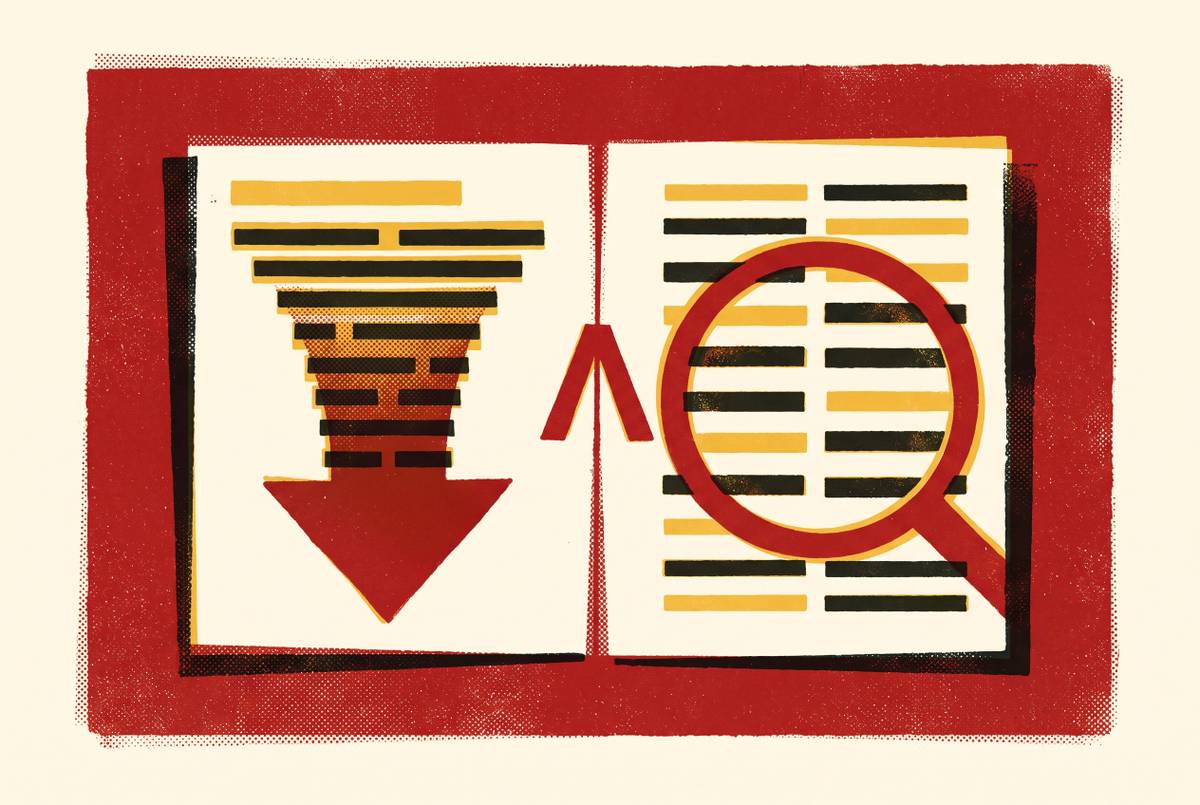
Accessibility and inclusive language standards, SEO and digital guidelines, and the review and approval process complete the architecture. The review section identifies who checks what and at which stage, without absorbing the entire editorial policy. The most-consulted material, especially voice, terminology, and formatting, should appear first or be reachable in one click, while occasional reference material can sit deeper.
Format determines whether a guide gets used: digital hubs versus static PDFs
A 60-slide file buried several folders deep is hard to use when a deadline is near. The format must let someone find an answer in thirty seconds and know that it reflects current standards. Static PDFs make both tasks harder when copies circulate and updates lack a dedicated process. A reference to a logo redesigned eighteen months ago gives readers reason to distrust more than the logo section.
Mailchimp puts its Content Style Guide online for anyone to use, showing how a guide can make writing advice easy to find. Starbucks publishes an interactive guide that shows how the Siren logo and green palette work across brand touchpoints through case studies, core elements, and application examples.
A PDF remains suitable for stable, infrequently updated material or teams without a platform for a hub. Digital is the stronger choice when standards change regularly, answers need to be found quickly, or external partners must avoid old versions.
How co-creation and onboarding integration drive adoption, and distribution alone does not
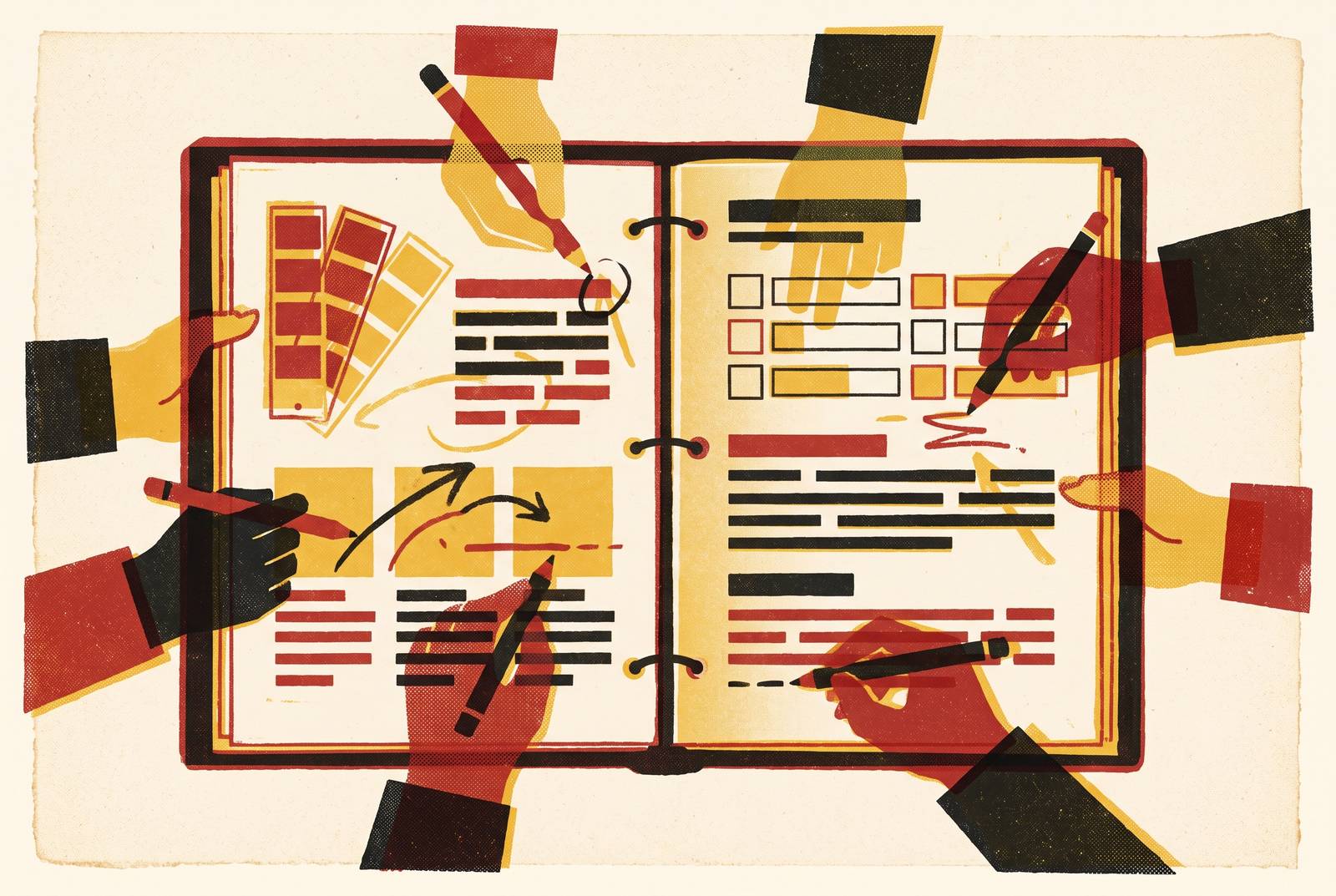
Adoption begins before publication, when the writers who will use the guide help build it. Involving them in voice examples and terminology decisions gives them access to the reasoning behind the rules. That reduces the need to interpret unfamiliar decisions later. The time spent on participation is an efficiency investment against repeated editing of content that misses the mark.
At launch, the guide should become a reference used during early assignments. Templates for common formats, including blog posts, emails, and landing pages, shorten the distance between understanding a rule and applying it. With a template, the person drafting does not have to derive the structure again from general voice guidance. After launch, a named managing editor or style guide owner keeps updates and enforcement from becoming work that belongs to everyone and therefore no one.
Writing voice and tone guidelines that writers can actually apply
The voice section succeeds only when its language changes how someone writes. Descriptors such as “strategic,” “authentic,” and “approachable” do not, by themselves, explain sentence structure, word choice, or paragraph openings. “Be approachable” leaves too much interpretation to the person drafting. Short sentences, active verbs, plain language, and jargon only where the audience expects it turn that intention into observable choices.
A helpful voice, for example, deals with readers’ questions and what they should do next. Negative guidance narrows the range further by specifying that the brand is “not overly casual,” “not promotional,” or “not robotic,” where those limits apply. Correct and incorrect paragraph snippets should then demonstrate the distinction in the guide’s own voice, reducing the need for editors to explain the boundary repeatedly.
Tone needs a separate account of context. A support article and a product launch post can sound different while remaining recognizably the same brand. The guide should also document primary and secondary audiences, their knowledge level, and their expected reading context. Those choices shape which jargon and words fit, how long sentences should be, and how much to explain.
These instructions must also survive translation into an AI prompt. “Clear, helpful, calm” provides usable direction, while “embodies strategic authenticity” does not. The practical test is whether a non-expert could follow the instruction without needing an editor to interpret it.
What a style guide needs to add when AI tools are generating first drafts
AI drafting makes that precision more important because vague direction can produce voice drift across hundreds of pieces. Plausible prose is not necessarily distinctive prose. Without strict style enforcement, output can move gradually toward generic median-internet tone. A guide that relies only on people to work out what its rules mean does too little to prevent that drift.
For AI-drafted content, voice traits need instructions written as direct commands that can go into a prompt. The preferred language list should come with every brief so product names, service names, and recurring terms are the same from the start. A forbidden-words list should identify language that is off-brand, inaccurate, or legally sensitive. Claim-handling rules should say which claims need cited sources and which need a person to review them before publication, and formatting conventions must be spelled out.
Review then proceeds through three stages. The first is automated voice checking with tool-assisted grammar and brand-voice prompts. The second is a human voice audit using a standardized checklist for personality traits and sentence structure. The third is a brand alignment review focused on strategic positioning and differentiation. Human judgment remains necessary for live community engagement, real-time reactive content, relationship-driven content, deep strategic decisions, and originating the brand voice itself.
Why a style guide now shapes whether AI answer engines cite your brand
The same standards also affect how coherently a brand appears in the sources AI answer engines retrieve. ChatGPT, Claude, Gemini, and Perplexity draw on retrieved content when grounding answers. Consistent terminology, clean factual claims, and extractable structure provide a clearer signal than contradictory names or shifting claims.
That consistency cannot stop at the company website. Gemini draws heavily from websites that brands own, but each platform has its own way of choosing sources. Guidance therefore needs to address how brand language appears across owned pages, Wikidata, G2, YouTube, and industry publications. The task is to keep the brand name and key claims coherent across those channels.
GEO-oriented standards add a practical layer to the guide. These include sections that put the main point first, statistics accompanied by primary source citations, and cross-platform brand presence guidance. To see how well this works, teams should track AI mention rate and citation rate by model and intent. Whether relevant answers name and link the brand provides feedback on the intended outcome rather than assuming that consistent writing guarantees citations.
Keeping the guide current: ownership, update cadence, and the maintenance trap
Measurement has limited value if the standards feeding production are out of date. The maintenance trap begins when teams treat launch as completion and leave subsequent changes unowned. A managing editor or brand standards lead needs explicit responsibility for keeping the guide current. Revisions should follow changes in positioning, product names, audience, or channels.
Version control must also make the current rules unmistakable. A digital hub gives teams one up-to-date online reference in place of several competing files, while edits that keep coming up show what needs to be added to it. For AI-pipeline teams, outdated rules carry further because the system can repeat them across every piece it produces. Updating the guide is therefore part of maintaining the production process.
A guide writers use is short, findable, current, and built with the people who depend on it. Its structure reflects how they seek answers under pressure, and its owner keeps those answers reliable. That design does the work that reminders and good intentions cannot.