Transitioning Content Production From Agency to In-House
Moving from agency to in-house requires building systems before cutting the retainer.

Advertisement
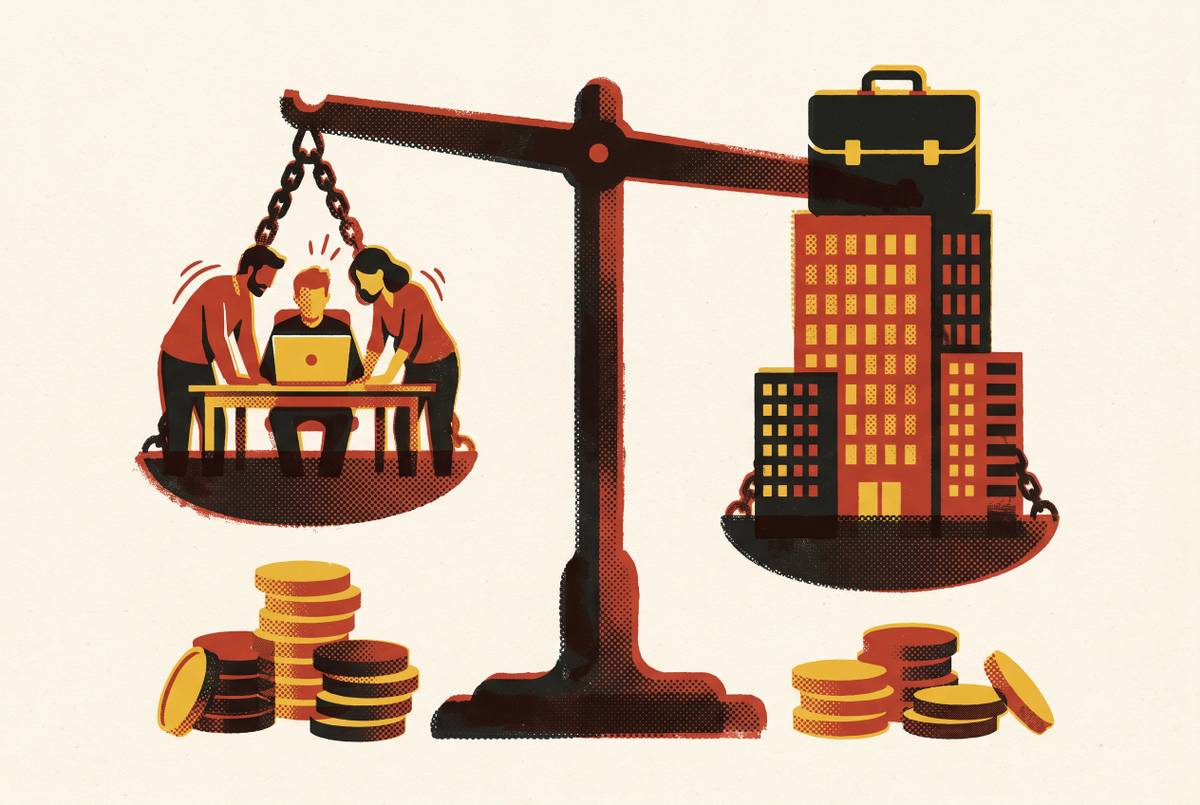
Most teams treat the move from agency to in-house as a budget line item: cut the retainer, hire writers, save money. That framing misses the actual decision, which is about systems, not spend. The standard 2026 comparison sets agency against in-house and stops there, missing a third option, the managed content platform, where a brand keeps strategic control while a vetted network handles production through a structured process. Each model allocates responsibility differently: an agency owns production and delivers finished work, an in-house team owns strategy, production, quality, and institutional memory, and a managed platform splits the difference. The retainer invoice looks clean next to a fully staffed internal team's true cost, which is why teams anchor on that number and stop looking further. What gets lost in that anchoring is where the risk actually sits once the agency contract is gone. An in-house team owns everything: strategy gaps, quality lapses, a departing employee taking years of brand knowledge with them. None of that gets distributed across a vendor relationship anymore. It lands, in full, on whoever runs the internal team.
What in-house content costs once you count everything
Founders price this out by looking only at base salary, and that mistake produces an unplanned budget overrun. Recruiting fees run as a percentage of first-year pay. Benefits load adds a meaningful chunk on top of salary. Then there's the software stack: attribution, SEO, creative, and scheduling tools. Add management overhead, the time a senior marketer spends supervising instead of producing, and the picture looks less like a line item and more like a department.
Ramp time compounds the problem in a way easy to underestimate going in. A new hire doesn't publish usable work in week one. It takes weeks or months before an in-house writer or strategist produces at the level a brand needs, and a team on a tight publishing calendar feels that gap immediately.
So how does a team actually run the numbers here? Take the fully loaded in-house cost, divide it by expected monthly output, and compare that cost-per-asset figure against equivalent agency pricing. For most mid-market B2B teams producing 8 to 15 assets a month, the agency wins on cost per asset for the first six months, full stop. Each model has advantages the other lacks. The answer depends on volume targets, content complexity, and how much runway the team has before hitting full stride.
Where in-house teams stall in year two
Year one almost always looks like a win: agency fees drop, turnaround speeds up, the team feels more in control, exactly the pattern Liam Brennan laid out to the ANA's In-House Agency Committee in January 2026. What follows is a plateau, arriving as the team absorbs the operational weight the agency used to carry, unnoticed.
The plateau has a recognizable shape. Creative staff start churning once the novelty of the new team wears off. Capability gaps widen as content demands diversify beyond what the original hires were built to handle. Costs climb as headcount grows to patch those gaps. And the operating model that felt nimble in year one calcifies into something that no longer matches what the market actually needs.
The ANA's 2026 State of In-Housing Report finds that in-housing is not collapsing, but the 2025 wave of high-profile shutdowns, dubbed "un-housing" by trade press, was a real signal. The failure sits in under-built infrastructure. The report's jurors are five times more likely to say marketers are in-housing more than ever than say they're pulling back, and a majority now see in-house agencies' primary role as strategic partner for upstream brand-building, not just production.
Eve Asbury, who leads the creative team at Boathouse, said most in-house agencies carry too many managers relative to makers, producing more meetings than needed and too many opinions on decisions that don't need them. Culture and shared purpose give a team flexibility to absorb something new without falling over, and that's exactly what gets squeezed out once the management layer outgrows the production layer.
There's a governance dimension to this that almost nobody names when the transition starts. In-house teams inherit every responsibility the agency used to quietly absorb: union compliance, production payroll, vendor management, and review chains that catch errors. CMS Productions flagged this in a May 2026 post: when in-house teams scale fast, this layer breaks first.
The infrastructure that must exist before cutting the agency relationship
The sequencing matters more than almost anything else in this transition. The agency relationship shouldn't end until the systems, roles, and workflows it provided exist internally, fully built, not half-drafted.
What did the agency hand over, beyond finished pieces? A structured process that took a brief and turned it into a published asset with clear handoffs at each stage. Specialist depth across formats, SEO, design, localization, and distribution that a single in-house hire can't replicate alone. A review and QA layer where accountability was documented. And surge capacity for the weeks when volume spiked past what a steady-state team could absorb.
Before that relationship gets cut, a handful of roles need to be filled, not as an exhaustive org chart but as a capability checklist. Someone must own strategy and brief quality, separate from execution. The team needs enough makers relative to managers, the ratio Asbury named. Someone or something needs explicit ownership of QA and brand voice consistency. A distribution and measurement function must exist, since content without performance tracking is just guessing with extra steps.
The brief itself tests readiness, not formality. A strategist-written brief covering audience, keywords, structure, tone, word count, required points, and brand/SEO standards saves real time downstream, in production and review. If a team can't produce that document consistently, it isn't ready to lose the agency's process discipline yet.
For regulated categories, pharma, medical device, financial services, this isn't optional. Someone must put in writing who bears the consequence when content reaches a regulator, and whether internal review meets the same bar the agency contract guaranteed. Liability gets settled before capability gets assumed, not after.
AI content pipelines and staffing math for in-house teams
The old argument for keeping an agency retainer, that execution needs a large dedicated team, is losing ground fast. Per the Gartner CMO Spend Survey, many agencies already cut junior copywriting headcount in 2025, with more cuts planned, because drafting that once required several junior staffers is now handled by AI at first pass. That's a meaningful chunk of what agencies used to bill for, gone as a cost center.
What AI actually gives back isn't headcount, it's hours. Platforms like Letterstory, which publishes content and tracks whether AI answer engines actually cite the brand, are built around that recovered capacity. Research on AI adoption in marketing found senior practitioners recover meaningful hours weekly by folding AI into content work, reclaimed time, not a replaced role.
By 2026, a six-stage pipeline has become the standard architecture for teams doing this well. Strategy and brief come first, and that stays human-led. AI generates drafts across formats next. Then automated QA runs: brand voice check, plagiarism scan, compliance flag. Human review follows, checking facts, refining tone, applying judgment a model can't make alone. Then publication and distribution, and finally performance monitoring with periodic refreshes as the content ages.
The automated QA stage is where most teams either do it properly, skip it, or do it manually; human review must specifically cover generic AI-voice detection.
None of this works without a human-in-the-loop design that's actually built for scale. Routing logic needs to send only the uncertain outputs to a human reviewer, not everything. The interface must show a reviewer the AI's reasoning next to its answer. And every decision needs an audit trail. That's the difference between a HITL system that holds up under real volume and one that collapses the first time output triples.
The practical result: a smaller in-house team running an AI-assisted pipeline properly can match or beat what an agency retainer used to require. The staffing math changes. The need for human judgment at the decisions that actually matter does not.
Content quality requirements in 2026 that an in-house team must be built to meet
Content Marketing Institute's B2B research found most high-performing teams credited better content relevance and quality for their results, and a similar share pointed to stronger team skills, not new tools. People and quality drove the outcome. Technology came second.
The bar content has to clear now is wider than it used to be. A single piece must carry SEO weight, appear in AI search results, function as thought leadership, generate demand, support sales conversations, work as email and social, build trust, educate prospects, and retain customers. A team built for one or two of those jobs will quietly underperform on the rest, even if unnoticed at first.
AI visibility specifically deserves its own line in the quality brief. ChatGPT processes 2.5 billion prompts daily, with a large share qualifying as search, so visibility in AI answers is not a future concern. Research from Princeton, Georgia Tech, the Allen Institute for AI, and IIT Delhi found content built around statistics, citations, and direct quotes appears far more often in AI answers. Evertune's analysis of citations from 25,000 URLs found listicles account for the largest share of AI citations, with nearly half coming from a page's first portion, meaning structure itself functions as citation infrastructure.
Entity consistency deserves to sit on the same list, as a real editorial standard. If a brand's naming, product terms, and definitions shift between pages, models struggle to understand and cite the brand accurately. That's a standard an in-house team has to own directly, page by page.
The scorecard for measuring all this has to run on two tracks at once. One tracks the traditional metrics: clicks, rankings, conversions. Content now serves multiple simultaneous jobs, and these metrics don't always move together. A page never ranked on Google can still be regularly cited by an AI system, so a team watching only one dashboard works half-blind. LLM visibility encompasses citation frequency, mention consistency, and platform coverage across ChatGPT, Claude, Gemini, and Perplexity.
A specific failure mode, Ghost Rankings, occurs when an AI system cites a brand and recommends its content, then suggests a competitor for the actual purchase decision. The brand shows up. The conversion goes elsewhere. It's a measurement gap: brand is visible, conversion is lost. The AI visibility dimension specifically. The two-track content scorecard an in-house team needs.
A phased transition: the sequence that avoids the common failure modes
The rule that produces everything above is simple to state and hard to follow: build the internal capability alongside the agency relationship, not after ending it. The real transition point isn't the day someone approves the budget change. It's the day internal output matches what the agency delivered, in volume, quality, and coverage across all the jobs content now must do.
Phase one is documentation, done before any hiring starts. Map every deliverable the agency currently produces and who inside the company uses each one. Write down the brief-to-publish workflow as it runs today, since gaps become visible once it's on paper. Figure out which agency functions need a new hire, a tool, or a new internal process. Set up the two-track measurement framework, organic performance plus LLM visibility, before the first internal piece goes live.
Phase two is staffing, and the order matters. Apply the Asbury ratio and hire for production capability before adding another layer of coordination. Bring on the brief-owning strategist first, since a weak brief feeding an AI-assisted pipeline compounds errors across every piece that follows. Define the QA and human review function in writing before it's needed, not after the first brand voice complaint arrives.
Phase three means running both systems side by side for a defined stretch of time. That's not wasted redundancy but calibration, catching capability gaps while small, before they become missed deadlines or client-facing mistakes. Contentoo's framing holds too: break-even on in-house investment typically arrives 18 to 24 months out, and parallel production compresses that learning curve rather than just waiting it out.
Phase four is where most teams get the ending wrong. Cutting the agency relationship doesn't have to mean cutting all of it. Most brands with a serious in-house operation still lean on outside partners for anchor campaigns, specialist formats, and surge capacity. CMS Productions made the same point in May 2026: most brands with real content volume run both models at once, and the real question is which work goes where. The hybrid approach Sagefrog documented in early 2026 is a deliberate structure for teams that couldn't fully commit. It's a deliberate structure: keep agency relationships for work the in-house team isn't yet equipped to handle, while the internal team owns everything else.
This is also where the pipeline choice from earlier in the transition starts to matter in practice. It's one option among a few, not a shortcut, and it only matters once the roles, brief discipline, and QA ownership from phase two are in place. Phase 2 (Staff for makers, not managers).
Sources
- Agency vs In-House Content Marketing: 2026 ROI Comparison | Contentoo
- In-House Agencies: Trends and Best Practices | ASK Answers | All MKC Content | ANA
- Independent Production vs. In-House Agencies: What the AICP Debate Misses - CMS Productions
- In-House Marketing vs Agency, What the Filings Show
- Switching from Agency to In-House: Biggest Challenges and Lessons Learned | We Are Amnet
- AI is pulling ad production in-house